E-bike basics
Understand pedal assist, bike styles and the components that make electric riding possible.


Electric bicycles make it easier to explore neighborhoods, enjoy scenic rides and discover new places at your own pace. This site is a place for e-bike photos, riding stories and practical information for people who are curious about electric cycling. Whether you are considering your first bike or already enjoy riding, there is always something new to learn and share.
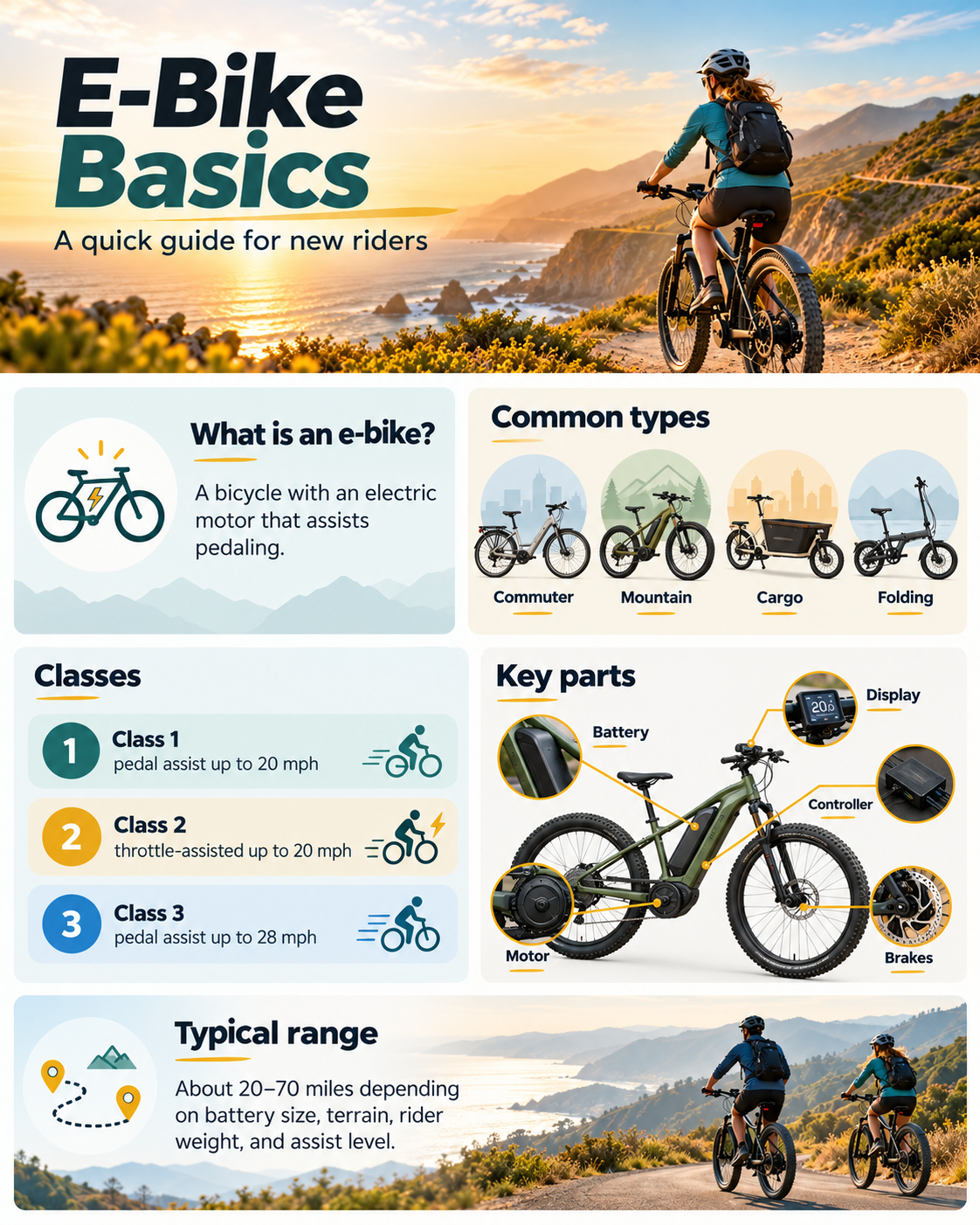
An electric bicycle combines familiar bicycle components with a motor, battery and controls that provide assistance while riding. On pedal-assist models, the motor helps as you pedal. Some models also offer a throttle, depending on the bike and applicable rules. Assistance can make hills and longer rides feel more manageable, but an e-bike is still a bicycle that needs proper braking, handling and routine care.
Different bikes suit different needs. Commuter models focus on everyday transportation and convenience. Folding models can help when storage space is limited. Cargo bikes are designed to carry additional loads, while many mountain-style e-bikes are built for rougher terrain. The best choice depends on fit, intended use, comfortable handling, available storage and the routes you actually plan to ride.
Manufacturer range estimates are only a starting point. Hills, wind, tire pressure, rider and cargo weight, temperature and assistance level all influence battery use. Try to test ride a bike before buying, and consider whether replacement batteries and local service are available.
A good ride begins with a few simple checks: tire condition and pressure, working brakes, functioning lights and a securely attached battery. Wear a properly fitted bicycle helmet, remain visible and give yourself extra stopping distance. Be mindful around pedestrians, especially on shared paths. Rules about e-bike classes, speed and trail access vary by location, so check current local requirements before setting out.
Battery care matters too. Follow your manufacturer's instructions, use the supplied or manufacturer-approved charger and avoid charging or storing batteries in unsafe temperatures. If the battery is damaged, unusually hot, swollen or behaving abnormally, stop using it and seek qualified assistance. Routine chain cleaning, brake inspection and proper tire inflation can make a meaningful difference over time.
This website is built around photographs and blog posts. The images below introduce three useful topics: understanding e-bikes, choosing a bike and keeping it in good condition. Future posts can include ride photographs, route observations, practical lessons and personal experiences as they are actually documented. The goal is straightforward: share useful information and the story behind each picture.
Explore the Photos page for albums and the Blog for longer stories and updates. New original posts will be added as they are created.
Starter examples only - these are not published posts.
Understand pedal assist, bike styles and the components that make electric riding possible.
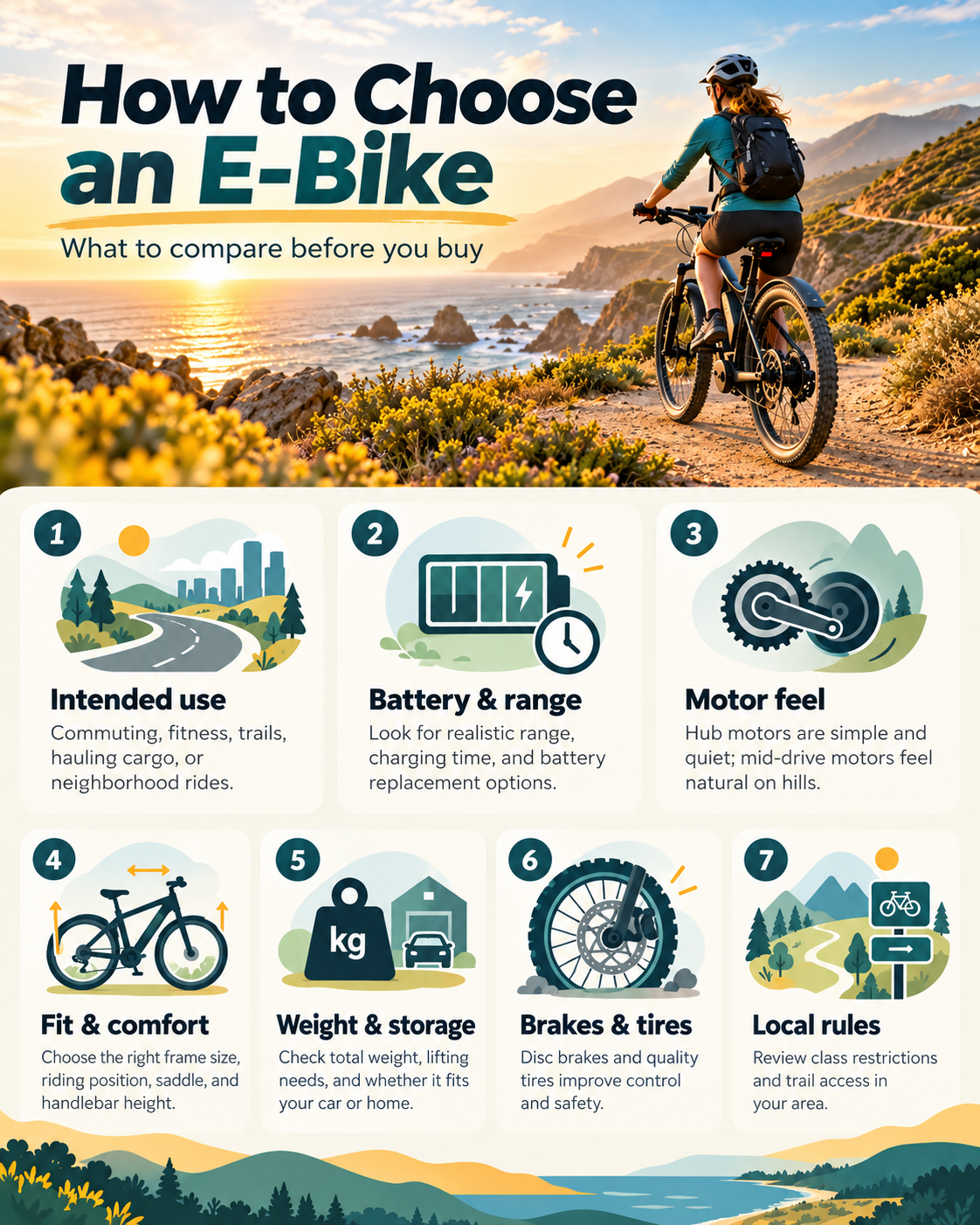
Compare comfort, battery range, motor feel, carrying needs and where you plan to ride.
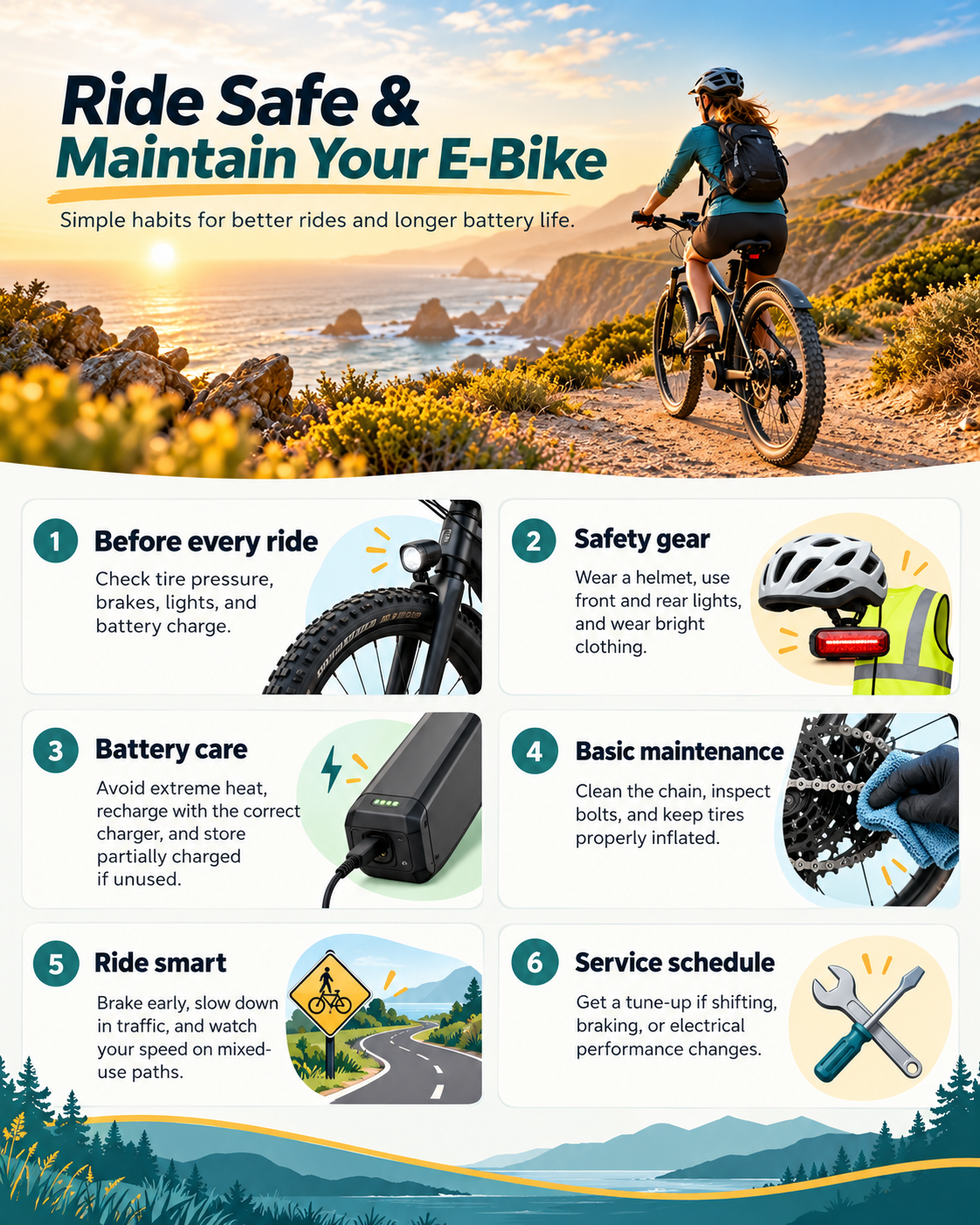
Simple checks and care habits help keep rides comfortable and your equipment in good condition.